
Why Do Hands Sweat While Writing? Causes, Solutions, and Tips for Students
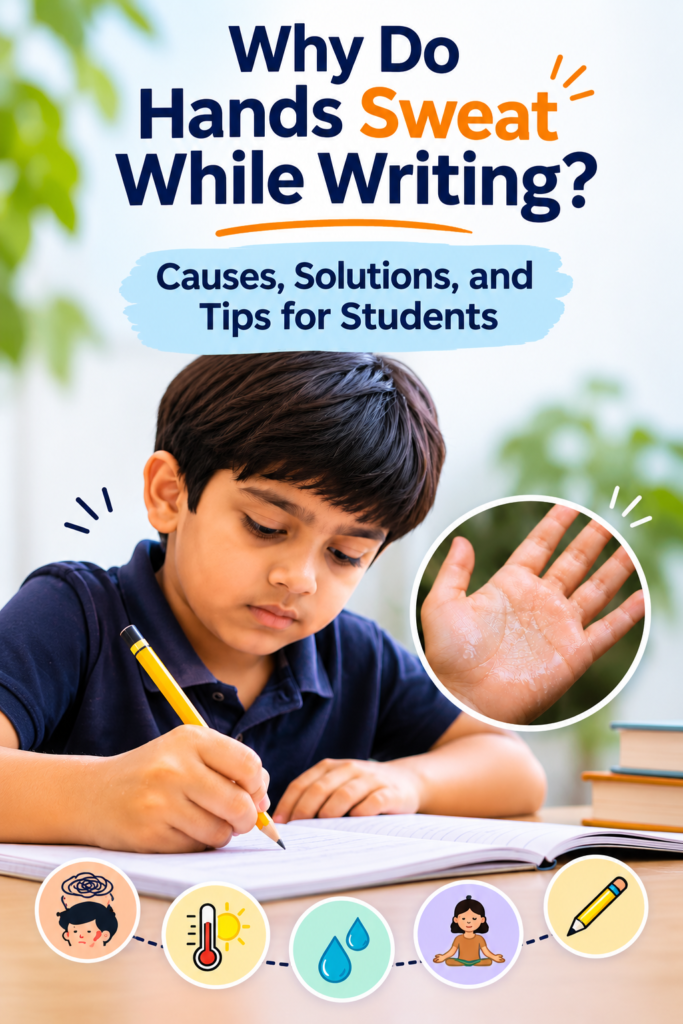
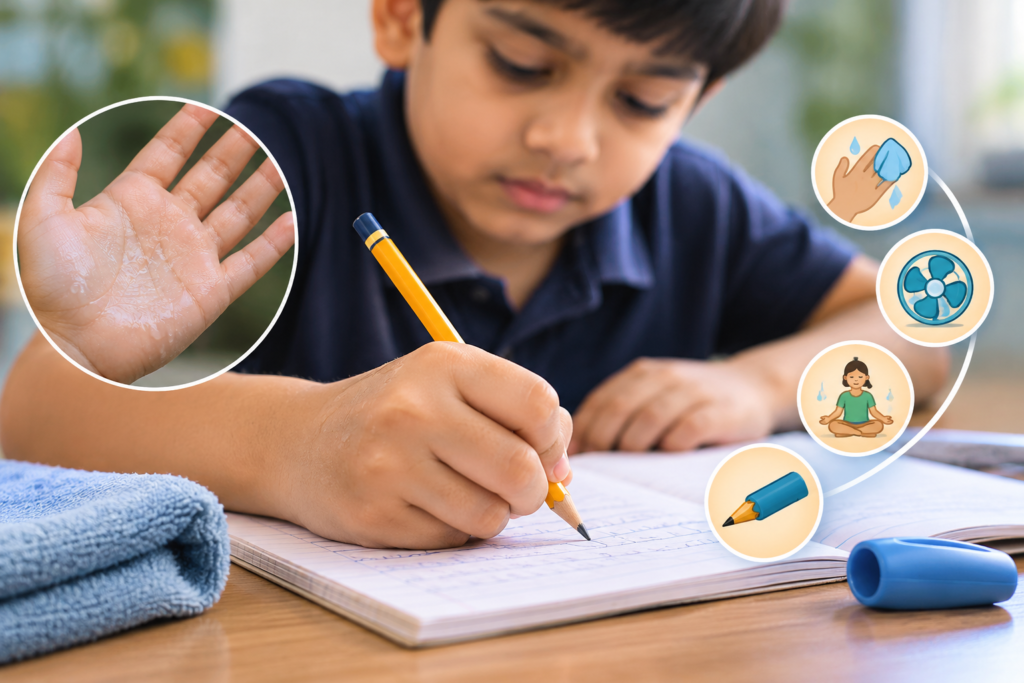
Why Do Hands Sweat While Writing?
There are several possible reasons why hands become sweaty during writing.
1. Anxiety and Nervousness
Examinations, dictation, timed writing activities, or the fear of making mistakes can trigger the body’s stress response. This may increase sweating, particularly on the palms.
Excessive Activity of the Sweat Glands
Some people naturally experience excessive sweating of the palms, a condition known as palmar hyperhidrosis. It can occur even when the weather is cool or the person is relaxed.
3. Heat and Humidity
Warm temperatures and humid weather can make sweating more noticeable during writing practice.
4. Stress and Emotional Responses
Excitement, tension, and emotional stress can activate the nervous system and increase palm sweating.
5. Other Health-Related Causes
Certain medications and some medical conditions can also contribute to excessive sweating.
How Can We Manage Sweaty Hands While Writing?
As handwriting trainers, we can encourage simple habits that make writing more comfortable.
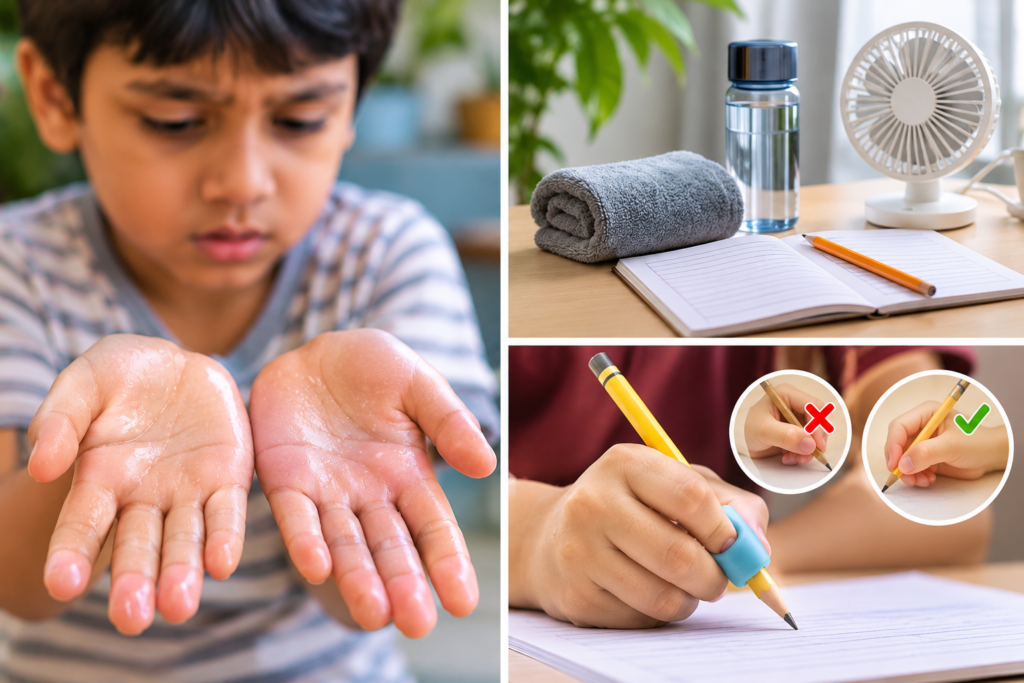
● Keep hands dry: Wash and dry the hands thoroughly before beginning a writing activity. Keep a soft, clean towel nearby.
● Maintain a comfortable pencil grip: Encourage children to hold the pencil without applying excessive pressure. A relaxed grip can reduce hand fatigue, although it may not stop sweating itself.
● Create a comfortable environment: Ensure good ventilation and maintain a comfortable room temperature.
● Take short breaks: During lengthy writing sessions, allow students to pause, dry their hands, and relax.
● Reduce writing anxiety: Encourage children to focus on gradual improvement rather than perfection. Calm breathing and supportive feedback may help when stress triggers sweating.
● Reduce writing anxiety: Encourage children to focus on gradual improvement rather than perfection. Calm breathing and supportive feedback may help when stress triggers sweating.
● Choose suitable stationery: A comfortable pencil or pen with an appropriate grip may help students maintain better control when their hands are damp.
When Should Parents Seek Medical Advice?
If sweating is frequent, excessive, or interferes with everyday activities, parents should consult a healthcare professional. Treatments are available for excessive palm sweating, and a clinician can recommend an appropriate option.
If sweating begins suddenly or is accompanied by symptoms such as chest pain, faintness, or significant palpitations, urgent medical assessment is necessary.
The Role of a Handwriting Trainer
A handwriting trainer should observe whether a child’s writing difficulties are related to pencil grip, posture, writing pressure, anxiety, or sweaty palms. These factors should not automatically be treated as the same problem.
The aim is to provide a comfortable writing environment, appropriate practice, and encouragement without embarrassing the child or making them feel different.
Conclusion
Handwriting improvement is not only about beautiful letters, correct spacing, or writing speed. It is also about understanding the challenges that may affect a learner’s writing experience.
Remember: Every child deserves the opportunity to write comfortably and confidently, without unnecessary pressure.
Small steps, patient guidance, and the right support can make a meaningful difference in a child’s learning journey.
Master Trainer Sonal Karia
Handwriting Improvement